
7 Warning Signs a Tree on Your Property Needs to Be Removed ASAP
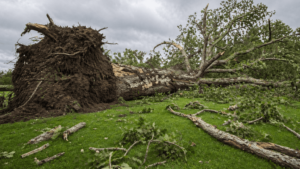
Trees add natural beauty to your property. But, when they show visible signs of decay and your ignorance causes any accident, the lawsuit may result in severe settlements, due to the high risk of permanent injury or property damage. What’s more painful is that emergency tree removal services carry a 25% to 100% premium compared to normal service charges. If you’re lately concerned about how to identify such trees, start looking for seven visible signs as discussed in this article.
Signs a Tree Needs to Be Removed
If you notice any of the following signs, do not hesitate to call a dead tree removal service at your earliest convenience. It will save you and other people near your property from financial and health catastrophe.
#1 Large, Dead, or Hanging Branches (“Widow Makers”)
If some branches are fully dead or partially broken but still hanging at an unnatural angle, they should be removed ASAP. Known as “Widow Makers,” these dead branches snap out without warning and crush on a roof or injure a person, even with no wind.
If the branch is hanging directly over a structure, a driveway, or a play area, consider removing it ASAP.
How to identify them? Look for branches:
- With no leaves during the active growing seasons
- With brittle, dry, or peeling bark that can snap at any moment
- Hanging at a downward or diagonal angle
- With a bark ring that looks torn or broken away
#2 Trunk with Deep Cracks, Splits, or Cavities
The trunk is the internal fibre structure of a tree, just like our spinal cord. When the tree’s structural core is compromised, the trunk develops visible signs of deep cracks, vertical splits, or hollow cavities. That means the tree can no longer distribute weight and wind load evenly.
These trees are ticking time bombs. If and when they fail, the whole thing can come down at once. The degree of damage could be a lot worse than the widow makers.
How to identify them? Look for signs like:
- Vertical cracks or seams running along the length of the trunk
- Two main trunks growing from the same base with a deep crack in between
- Hollow sections visible through an opening in the bark
- Raised, callus-like edges in the wood, exposing the interior wide open
#3 Visible Uprooting or Heaving Soil at the Base
Around 90% of a tree’s structural stability comes from its root system. If the ground around the base of the tree begins to lift or crack, that means the roots are failing. When this happens, trees start to lose their grip on the ground, and they can topple completely in even moderate wind.
If you notice heaving soil combined with a recent lean or any storm activity, treat this as a same-day emergency.
How to identify them?
- Raised or buckled soil on one side of the tree base
- Visible surface roots or cracks in the soil radiating outward
- Soil near the base feels soft or spongy when pressed
- A slightly tilted tree with the soil on the opposite side compressing downward
#4 A Sudden or Progressive Lean
Have you been noticing any sudden or progressive lean with one of your trees on the property lately? Meaning the tilting has progressed over a short period of time.
It’s different from a natural lean that a tree develops when its root has grown and adapted to support that angle. But if that’s not the case, it puts uneven stress on the remaining roots. Such trees should be removed immediately if your property is in monsoon-prone or high-wind areas.
How to identify them? Look for trees that have:
- Developed a noticeable tilt that wasn’t there before
- A lean greater than 15 degrees from vertical
- Soil on the opposite side of the lean cracking or lifting
- Trunks with cracks on the leaning side
#5 A Damaged or Missing Crown
The crown represents the entire top section, all the branches, leaves, and growth that spread out above the trunk. If more than half of that crown is dead, bare, or missing, the tree can no longer recover. Without a healthy crown, the tree cannot photosynthesize. Once the crown is dead, the roots begin to die shortly after.
If more than 50% of the crown is dead, treat it as an urgent case regardless of how stable the trunk appears.
How to identify them?
- More than 50% of the branches are bare during the active growing season
- A major portion of the upper crown is either dead, brittle, or gray branches
- The tree has a lopsided or hollowed-out canopy
- Leaves are wilting, discolored, or dropping prematurely
#6 Soft, Spongy, or Hollow Trunk
Sometimes, trees may have internal rot due to fungi without developing any visible cracks or a leaning trunk. By the time the symptoms are visible from outside, the damage has progressed to an irreversible stage.
Fungi break down internal fibers until the core structure is left with soft, crumbling material that has almost no load-bearing capacity. The internal rot can spread unevenly inside the trunk, leaving no predictable direction for the fall.
How to identify them?
- Trunk feels soft or spongy when pressed firmly with a thumb
- Knocking on the trunk creates a hollow, drum-like echo
- Mushrooms, bracket fungi, or shelf-like conks growing directly on the trunk or at the base
- Insects entering and exiting through small holes in the trunk
#7 Bark Peeling Off in Large Sections
Bark is the functional layer of a tree that protects its vascular system from various diseases, pests, and environmental stress. When it begins to peel off in a complete ring around the trunk, the tree is exposed to fungal or bacterial invasion.
The tree’s healing mechanism quickly goes down. Bark loss that exposes large areas of raw wood can fall off at any moment, compounding the risk of damage.
How to identify them?
- Large sheets or slabs of bark peeling away from the trunk
- Sunken, discolored, or dead patches on the bark surface
- Peeled off areas reveal dark, stained, dry, or visibly rotting wood
- Multiple canker sites spreading or merging over time
Need a Tree Removed? Get Professionals At Your Doorstep Today
If you’re looking for a reliable tree removal service near you, Voolt Pro brings you a marketplace to choose from a group of local experts. Choose from vetted service providers with quick response time and a crew you can count on. Stay clear of the risks of trimming branches away from roofs, driveways, and power lines on your own. Let experts handle it safely with the right equipment.
FAQs
How do I know if a tree is dead or just dormant?
A dormant tree will still have flexible, green-tinged branches under the bark when scratched, and buds will be present during late winter. A dead tree will have brittle, dry branches that snap easily, no budding activity during the growing season, and bark that peels away to reveal dry, discolored wood underneath. You can also do the “scratch test” scrape a small section of bark with your fingernail. Green or white beneath means alive; brown and dry means dead. When in doubt, consult a certified arborist before the tree becomes a hazard.
Can a leaning tree be saved, or does it always need removal?
Not every leaning tree needs to be removed. A tree that has leaned gradually over many years as it grew toward sunlight often has a stable, well-adapted root system and poses little risk. However, a tree that has developed a sudden or progressive lean especially after a storm or heavy rain is a serious structural concern. If the lean exceeds 15 degrees from vertical, or if you notice soil heaving, cracking, or exposed roots on the opposite side, removal is the safest option. A professional arborist can assess whether cabling, bracing, or full removal is the right course of action.
What is the average cost of tree removal, and why does emergency removal cost more?
Standard tree removal costs typically range from $300 to $2,000 depending on the tree’s size, location, and complexity of the job. However, emergency tree removal when a tree poses an immediate risk to people or property can cost 25% to 100% more than a scheduled service. This premium reflects the urgency, after-hours availability, specialized equipment, and increased safety risks involved. Proactively identifying warning signs early and scheduling removal before a tree becomes an emergency can save you significant money.
Are fungi or mushrooms growing on a tree always a sign it needs to be removed?
Fungi growing on or around a tree are a serious warning sign, but not always an automatic death sentence. Surface mushrooms near the roots may indicate root rot, while bracket fungi or shelf-like conks growing directly on the trunk typically signal advanced internal decay. If the fungal growth is widespread, recurring, or accompanied by other symptoms like a soft trunk, hollow echo when knocked, or a sudden lean, removal is strongly recommended. An arborist can evaluate how far the internal decay has progressed.
Is it dangerous to remove a tree on my own without professional help?
DIY tree removal carries serious risks, especially for large or structurally compromised trees. Without professional training and equipment, you risk misjudging the fall direction, cutting into a hollow or unstable trunk, making contact with power lines, or causing uncontrolled collapse that damages your roof, fencing, or vehicles. Injuries from falling branches and improper chainsaw use send thousands of people to emergency rooms each year. Professional tree removal services carry liability insurance and use trained crews with the right equipment, making it the safest and most cost-effective choice for any high-risk situation.